The Picard Maneuver@piefed.world to memes@lemmy.worldEnglish · 1 day agoThere are two kinds of people.media.piefed.worldimagemessage-square159linkfedilinkarrow-up1458arrow-down16
arrow-up1452arrow-down1imageThere are two kinds of people.media.piefed.worldThe Picard Maneuver@piefed.world to memes@lemmy.worldEnglish · 1 day agomessage-square159linkfedilink
minus-squareKSP Atlas@sopuli.xyzlinkfedilinkarrow-up12arrow-down2·11 hours agoy-up ftw It’s easier when writing 3d renderers cause the x and y coordinates of the 3d points eventually become the x and y coordinates of the 2d points on screen and it’s easier to keep track of
minus-squaredev_null@lemmy.mllinkfedilinkarrow-up3·9 hours agoExcept when you are working on top-down game/3D environment. In which case you are constantly changing between Z and Y…
minus-squareVictor@lemmy.worldlinkfedilinkarrow-up2·9 hours agoIndeed, depth buffers etc are from the z coordinate. Also on the web, the “z-index” is the depth of elements in the world of CSS. I wonder in which contexts y would make more sense as the depth.


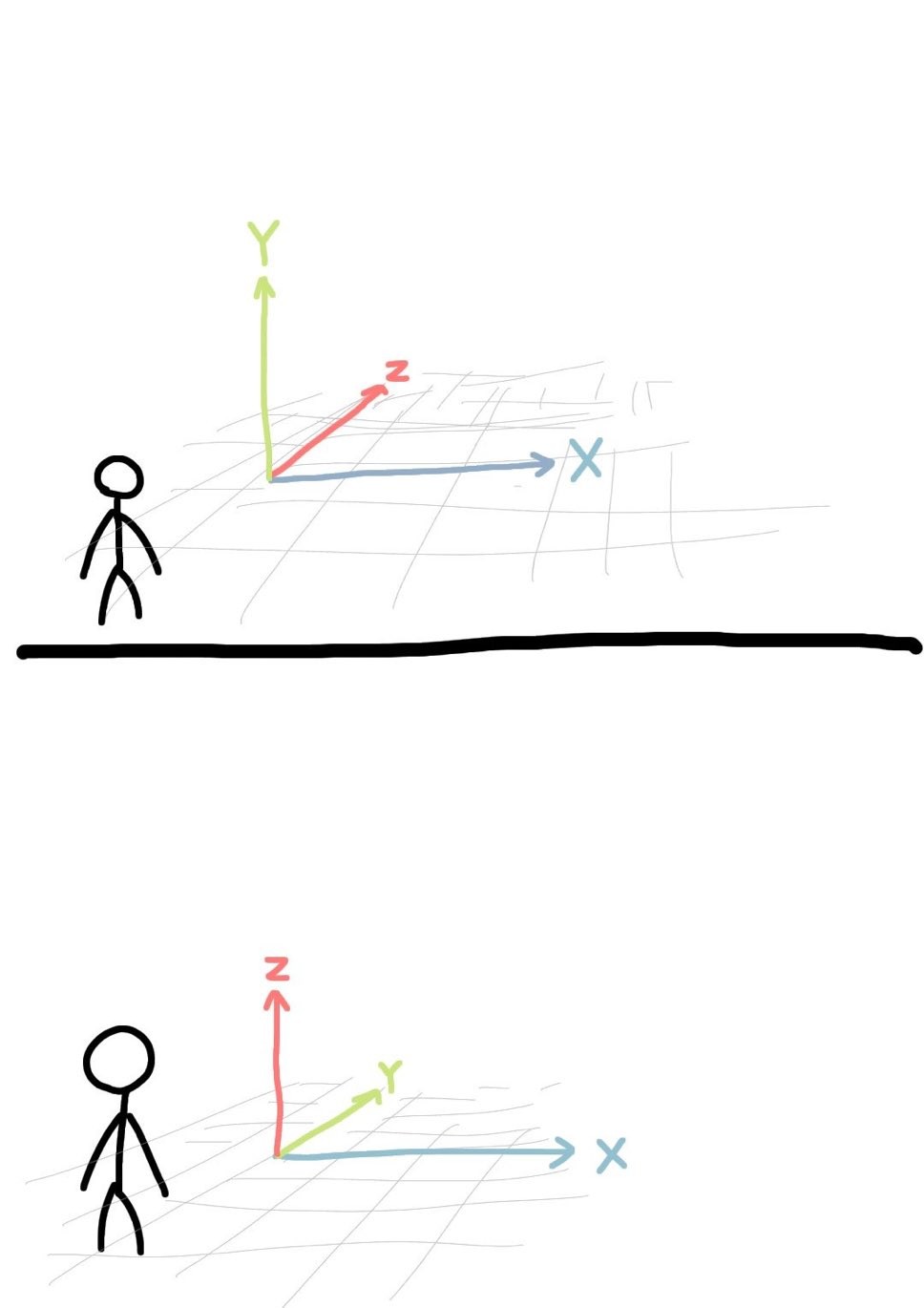
y-up ftw
It’s easier when writing 3d renderers cause the x and y coordinates of the 3d points eventually become the x and y coordinates of the 2d points on screen and it’s easier to keep track of
Except when you are working on top-down game/3D environment. In which case you are constantly changing between Z and Y…
Indeed, depth buffers etc are from the z coordinate.
Also on the web, the “z-index” is the depth of elements in the world of CSS.
I wonder in which contexts y would make more sense as the depth.