
Tbh these don’t even look that bad. Even many times you peel one of these and they are totally fine on the inside
- 5 Posts
- 13 Comments
Joined 1 year ago
Cake day: September 17th, 2023
You are not logged in. If you use a Fediverse account that is able to follow users, you can follow this user.
I was struggling to find a job and my friend looked at my resume and was like, dude you need to put more bullshit there, add a bunch of stuff, even if it’s fake, no one cares, everyone does it. After so much rejection I was willing to try anything, fortunately a company hired me just around those days. But next time I’ll probably have to take his advice…
Yes indeed it’s pretty technical and content-heavy. It helped me that I took a class in university that covered many of the topics, still a few things went over my head. Maybe it’s time I do a re-read of selected chapters
If you’re asking for real, Designing Data-Intensive Applications is probably the best I’ve ever read (if you’re into that kind of thing)
Another one of this kind is
rm -rf node_modules && npm install

 6·5 months ago
Your .env with production credentials is now up on a public repo
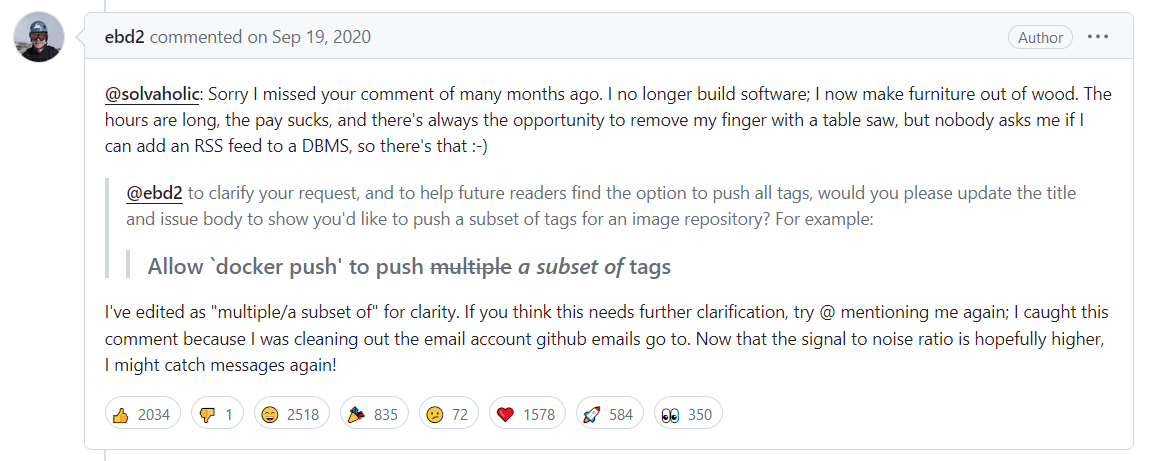
“I no longer build software; I now make furniture out of wood”


 10·10 months ago
“Your friends and family understand what you do”

Sounds like JavaScript
JavaScript and TypeScript too
Oh man I hadn’t seen a
git checkout -bin years haha since they introducedswitchandrestore, never looked back
Can relate. With colleagues we have daydreamed about opening a bar, a bakery, a hostel on the beach, yet we’re all still here, pressing buttons to make the lights on the screen change.
Dragon Ball characters, named Bibidi, Babidi and Boo, respectively.
(Ok the last one is called Majin Boo but he’s referred as Boo too)